
The “Dirty Dozen” is a list of fruits and vegetables, compiled by the Environmental Working Group (EWG), that you should eat organically to minimize your exposure to pesticides.
By opting for organic versions, you can significantly reduce your exposure to these harmful chemicals while also supporting sustainable farming practices.
Below, you’ll find the “Dirty Dozen” list, alongside the “Clean Fifteen,” which highlights produce with the lowest pesticide residues.
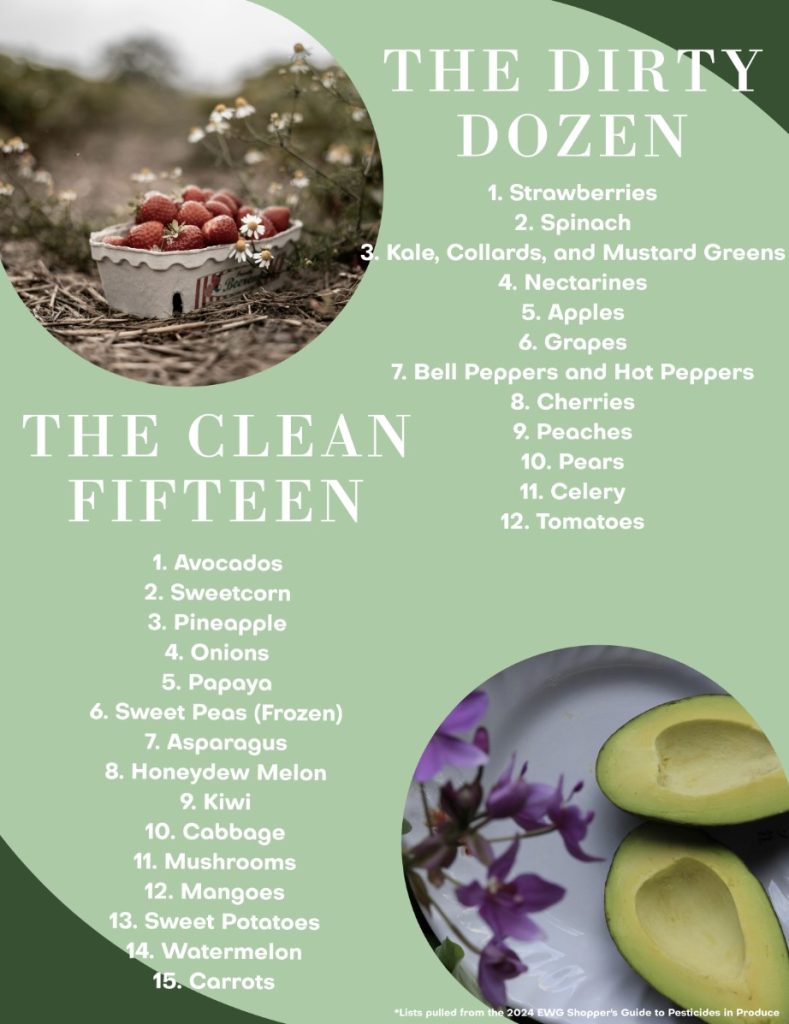
- Strawberries
- Spinach
- Kale, Collards, and Mustard Greens
- Nectarines
- Apples
- Grapes
- Bell Peppers and Hot Peppers
- Cherries
- Peaches
- Pears
- Celery
- Tomatoes
- Avocados
- Sweetcorn
- Pineapple
- Onions
- Papaya
- Sweet Peas (Frozen)
- Asparagus
- Honeydew Melon
- Kiwi
- Cabbage
- Mushrooms
- Mangoes
- Sweet Potatoes
- Watermelon
- Carrots
While the “Dirty Dozen” list may be concerning for some shoppers, it’s important to acknowledge the inherent health benefits of consuming fruits and vegetables, irrespective of their cultivation method. Extensive research consistently demonstrates that the health gains from eating a diet rich in plant-based foods greatly overshadow any risks linked to pesticide exposure. Choosing organic alternatives for items listed on the “Dirty Dozen” provides additional comfort, especially for individuals wary of the chemical use prevalent in conventional agriculture.
On the other hand, the “Clean Fifteen” list features fruits and vegetables that generally show minimal pesticide residues, even when conventionally grown. This list aids cost-conscious buyers in determining which produce to purchase organically. For example, items like avocados and sweet corn are top choices due to their natural barriers, which protect the inner edible parts from pesticide residues.
Moreover, utilizing organic farming techniques not only favors consumer health but also aids in environmental preservation. Organic methods typically include natural pest control, crop rotations, and organic composting, which collectively help to enhance soil fertility, foster biodiversity, and lessen agriculture’s overall ecological footprint. By opting for organic where practical, consumers not only choose better health options but also contribute to a more sustainable and environmentally friendly agricultural model.
In essence, whether you choose to purchase organic produce or not, increasing your intake of fresh fruits and vegetables remains a highly beneficial health decision. The “Dirty Dozen” and “Clean Fifteen” lists are intended as guides to help you navigate your choices more effectively, ensuring you receive the highest nutritional value from your diet while minimizing any potential risks.
Facts from the Environmental Working Group (EWG)
- Clean 15
- “These 15 items had the lowest amounts of pesticide residues, according to EWG’s analysis of the most recent USDA data.”
- “65% of Clean fifteen samples collected had zero detectable pesticides.”
- “No more than three pesticides appeared in samples of the first six Clean Fifteen items.”
- “<2% Avocados & Sweet corn showed any detectable pesticides, making them the cleanest fruits & veggies on the list.”
- “10% of Clean Fifteen fruit and vegetable samples contained two or more pesticides.”
- Dirty 12
- “Of the 46 items included in our analysis, these 12 fruits and vegetables were most contaminated with pesticides:”
- “90% of samples of strawberries, apples, cherries, spinach, nectarines and
- grapes tested positive for residues of two or more pesticides.”
- “209 pesticides were found in total.”
- “13 – 23 pesticides in at least one sample of each item.”
- “50 different pesticides were detected on every type of crop on the list, except cherries.”
- “100 total pesticides detected Kale, collard and mustard greens, as well as hot peppers and bell peppers.”